Cooling system service intervals exist because failure happens out of sight. A heat exchanger or aftercooler can look fine from the outside while a failed seal quietly lets sea water sit against the housing. Defer the service and a straightforward core clean becomes welding, machining and replaced parts.
If you have been handed a service scope for your coolers and you are not sure which lines are essential and which are optional, this one is for you.
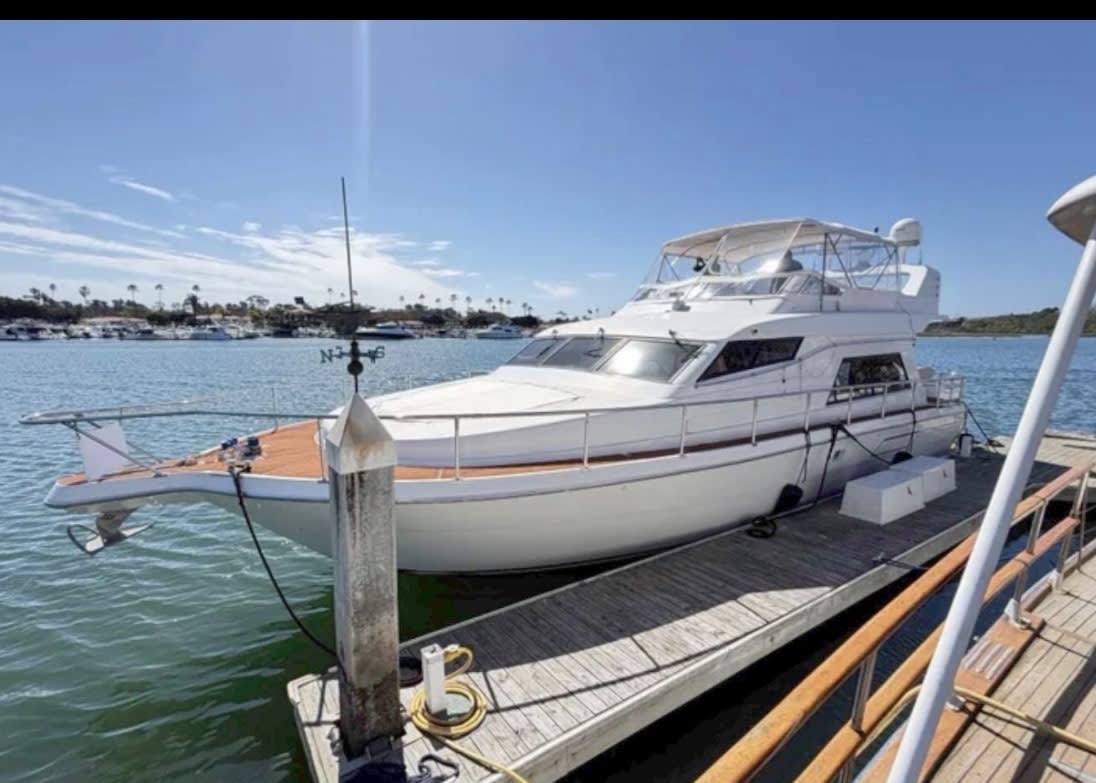
One engine a little warmer than the other, and nothing else
An owner I talk with was watching a sea trial on his own boat. Everything looked normal. One thing caught his eye: the starboard engine was running hotter than port. Not alarming. Just a split between two engines that should read the same.
That was the entire warning. No smoke, no alarm, no loss of power. A cooling system service was already coming up on its interval, and the question in front of him was how much of it to say yes to. Both engines or one. Every seal, or only the seals that turn out to be bad once things come apart.
At the same time, a near identical boat was going through the same service. That one is worth describing, because it is the whole argument.
What came off the boat next doorPort side clean, starboard side eaten
Port came apart the way you want it to. The plate cooler housing looked how it should look. Bolts out, core out, no drama.
Starboard was a different boat entirely. A seal had failed, and not recently. Sea water had been sitting against the aluminium housing that holds the plates on, and aluminium does not survive that. The housing came off pitted and crusted with corrosion around the port.
From the outside nobody would have known. Same engine, same hours, same service history, same interval, same marina. The only difference was a seal that let go quietly and gave the sea water somewhere to sit.
The job stopped being a core clean at that point. The housing has to come off, the pits have to be welded and machined out, and the face has to be brought back true enough to seal again. That is a workshop job, not a dockside one. All of it from one seal.
The other thing hiding in thereTwo different metals, sea water, and time
On a lot of engines the aftercooler is where different metals sit next to each other in a wet, salty place. Put two different metals in sea water and you have made a small battery. One of them gives up material to protect the other. That is galvanic corrosion, and it works away steadily whether anyone is looking or not.
It turns up in three places: the aftercooler pipework, the housing, and the core itself. Two things worth knowing as an owner.
Frozen brackets. Mounting hardware seizes solid. It usually cannot be persuaded off, it has to be snapped off and replaced. That is normal on an older installation, not a sign anybody did anything wrong, and it should be expected rather than treated as bad news halfway through.
The pink rim. On a copper alloy core, a pink or rosy edge is not staining. It is dezincification, where the zinc has leached out of the alloy and left porous, weakened metal behind. A core with a pink rim is a core on its way to failing. It gets replaced, not cleaned. The adapter collars where the pipework meets the aftercooler are worth the same look, because they live in the same wet salty joint and go the same way.
Everything can look fine from the outside. It is what is happening on the inside that counts, and the only way to know is to open it on schedule.
The decisionWhy the seal question is not really a question
When a scope says replace all seals, and there is an option to only replace the ones that have obviously failed, the second option looks like the sensible restrained choice. It is not.
A seal is the smallest part in the assembly and the only thing standing between sea water and metal that sea water eats. The seals are already out and in your hand while the unit is apart. Once it is buttoned back up, getting to them again means doing the entire job a second time.
And a seal that has not failed yet is not the same as a seal that is good. Rubber hardens with heat cycling and age. A gasket that looks acceptable on the bench can be a season away from doing exactly what the one on the boat next door did.
If a seal lets go and lets sea water into the coolant loop, or coolant into the sea water side, it stops being a cooling problem. Cross contamination means immediate removal and repair, and if sea water gets far enough into the engine it does damage that has nothing to do with the cooler.
What you can take awaySix things an owner can actually do
Watch the split between your engines. Two engines on the same boat, same load, same water should read close to the same. Write down what normal looks like on your gauges so you can tell when it is not.
Know your own interval and do not push it. Cooling intervals are set by the engine manufacturer and they vary by model, by hours and by how the boat is used. Get the schedule for your specific engine and work to that.
Say yes to the seals. Every time. It is the smallest item on the list and the one that decides whether the next service is routine.
Keep the anodes honest. Sacrificial anodes exist to be eaten instead of your heat exchanger. Check them regularly and change them well before they are gone.
Ask for photos. Ask your tech to photograph everything as it comes apart, the clean side as well as the bad side. You will never see inside that housing yourself. Photos are the only record you get, and they turn the next conversation about scope into a factual one.
Ask about the sea water path. Strainers, intake, impeller. Restricted flow shows up as heat long before anything else does, and it is a far easier fix than a corroded housing.
The differenceAn interval service is not a tax, it is your only look inside
A one degree split between two engines is often the only warning you will ever get, because this is a system that fails invisibly and then presents you with the bill for it all at once. The scheduled service is not somebody padding a list. It is the one moment where the inside of the thing becomes visible while the fix is still a small one.
Defer one and you have not saved the job. You have chosen a bigger one later, and you do not get to pick when.