The drill matrix is how superyachts turn green crew into people you can trust in an emergency. Four steps over a month: open discussion, walking-pace walkthrough, announced timed drill, then an unannounced one. A San Diego motoryacht owner is running it right now with a brand-new first mate, and it is working.
If you run your boat with a partner, family, or a new crew member, and the emergency plan currently lives only in your head, this one is for you.
A new crew member, a rough ride home, and a question
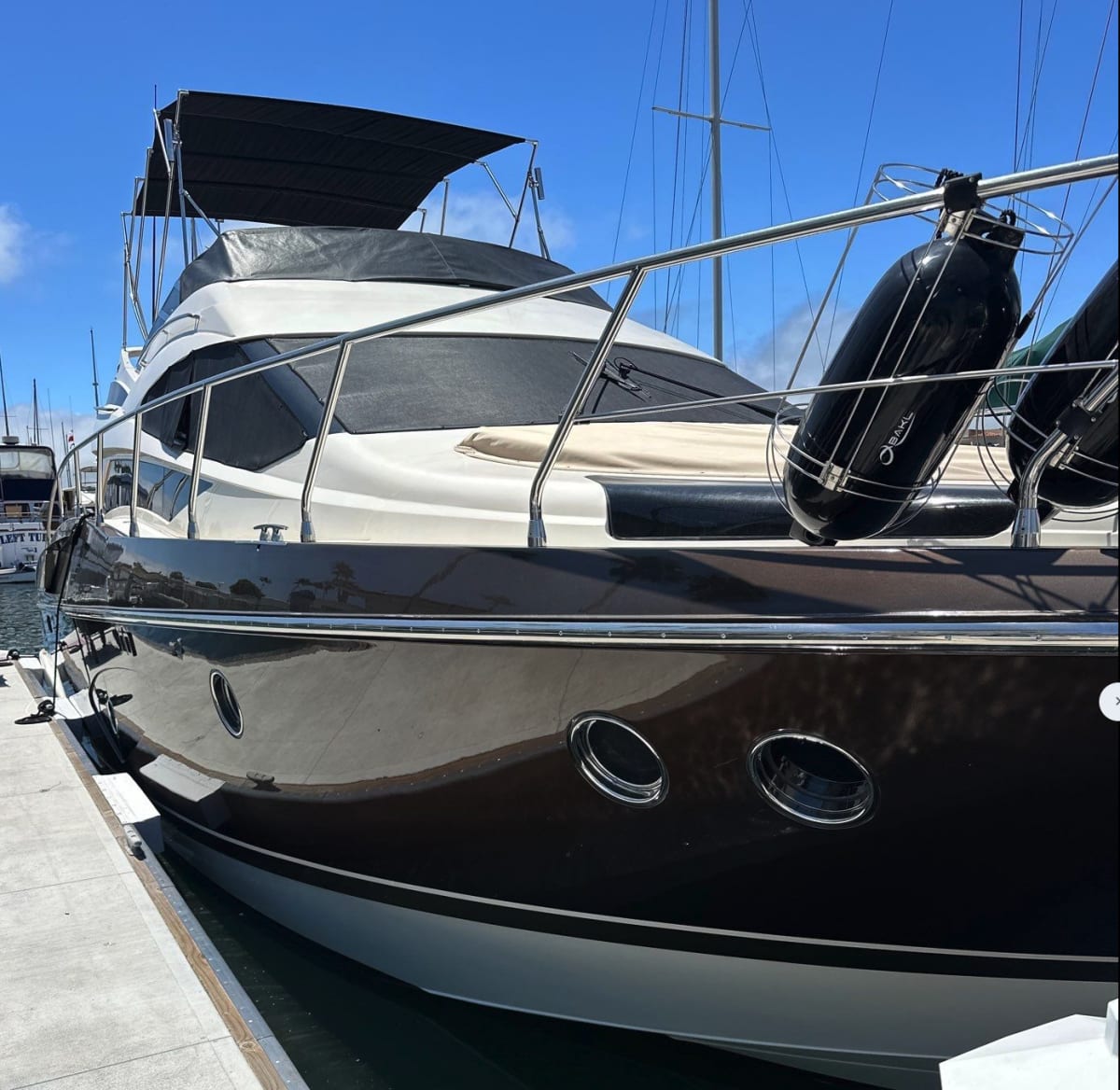
The owner in this case runs a 65-foot motoryacht and recently took on a brand-new crew member for his passages. Completely green, first time on a working boat. Their early trips together included a genuinely rough return from Catalina: four feet at nine seconds with fifteen to twenty knots of wind against it. No rhythm to it, just slop. You can adjust to rhythm with speed and angle. There is no adjusting to a washing machine.
She handled it calmly. Which told him she was worth investing in properly, and raised the question he brought to me: how do you actually drill a crew of two?
The principleYou never want a babysitter doing mum's work
Here is how I explained it. As the owner, you are the mum, and the boat is your baby. Hand it to me and you get a very aware aunt. A good management company makes a fantastic nanny. The boat guys next door are great babysitters. All of them have a place. But a babysitter will never take the interest in drilling your crew that a mum will. On your boat, drills are mum's work, and they cannot be outsourced.
Four steps, one month, one emergency at a time
The matrix comes straight off the superyachts I worked, where it is how a junior stewardess ends up carrying the same safety knowledge as the first officer. It goes like this, one step per week.
- Open discussion. No pressure, everyone has a say. What would we do right now if there was a fire? Go find the extinguishers together. Learn what type each one is and what it should not be used on. Set the tone early: this is normal, this is what we do here. Log it.
- Walking-pace walkthrough. Name a scenario, say a galley fire, and physically walk your roles at walking pace, stopping to discuss at any point. Power isolation comes off first, because the power is probably the source. Everyone handles the fire blanket.
- Announced, timed. You know exactly when and where the drill is. Run the full procedure at a normal pace, nobody gets hurt, and see how clean you can get it.
- Unannounced. Once the habits are in, the drill comes without warning. On one yacht we filled the crew corridor with a fog machine at two in the morning and hit the alarm. After a couple of those, nobody melts down. The muscle memory is real.
Then we adapted it for man overboard with a crew of two. Discussion first: on this boat, at this size, the honest answer is stop the boat, turn around, pick them up, accounting for wind and current. Walkthrough next, without throwing anything: take the boat to calm water and learn her characteristics against a fixed mark, approaching a speed marker from downwind until it sits within boat-hook range. Then the announced live drill. A fender goes over, and the person at the helm runs the whole sequence: life jacket on, boat stopped, eyes on the fender, radio if needed, recover it. I stand by, but I play the one in the water, so the procedure has to carry itself.
And then, one day on a future trip, the owner will say he is popping below for a minute, walk to the bow, make eye contact, and throw a fender over. That is the matrix fully alive on a two-person boat.
Two more habits went in alongside it. The helm handover: my helm is yours, helm is mine, said out loud both ways, with speed, course, and traffic named before anyone steps away. She took that seriously, which says everything about her. And the weather log: write down what the forecast said next to what you actually saw out the window. A year from now, the same forecast will tell you something real. That rough Catalina leg is now an entry: four at nine against twenty knots of breeze equals washing machine, fine for us, not for guests.
The rough ride taught one more lesson worth passing on. Slop finds everything that is not secured, and the salon furniture ended up in a pile. A few discreet eye bolts and straps behind the loose pieces, and that never happens again.
Where it landedA green crew member you can trust, and an owner enjoying his boat more
The new first mate handled a genuinely bad stretch of water calmly, takes handovers and briefings seriously, and is starting to see a path for herself on the water. The owner told me the whole boating experience has changed for him. He is renewed, planning drill days on his own initiative, and passing on what he learned the way he learned it. That is the whole point. The owner grows, the crew grows, and I get needed less.
The owner in this case. Name withheld for privacy.
The next step, once the two of them are comfortable and a little complacency creeps in, is me coming aboard to throw some spanners in the works. No judgment, purely growth. That is how the matrix keeps working after the basics are in.
A drill is not a test. It is calm, bought in advance. By the time the real emergency happens, everyone aboard has already done it four times.