Yacht maintenance training is one-on-one, on your own boat, with your hands in the systems: fluids, filters, seacocks, bilges, batteries, generator. The goal is not a certificate. It is an owner who knows what normal looks like and catches problems while they are cheap.
If your engine room is territory you pay other people to understand, or your maintenance knowledge ends at the dipstick, this is for you.
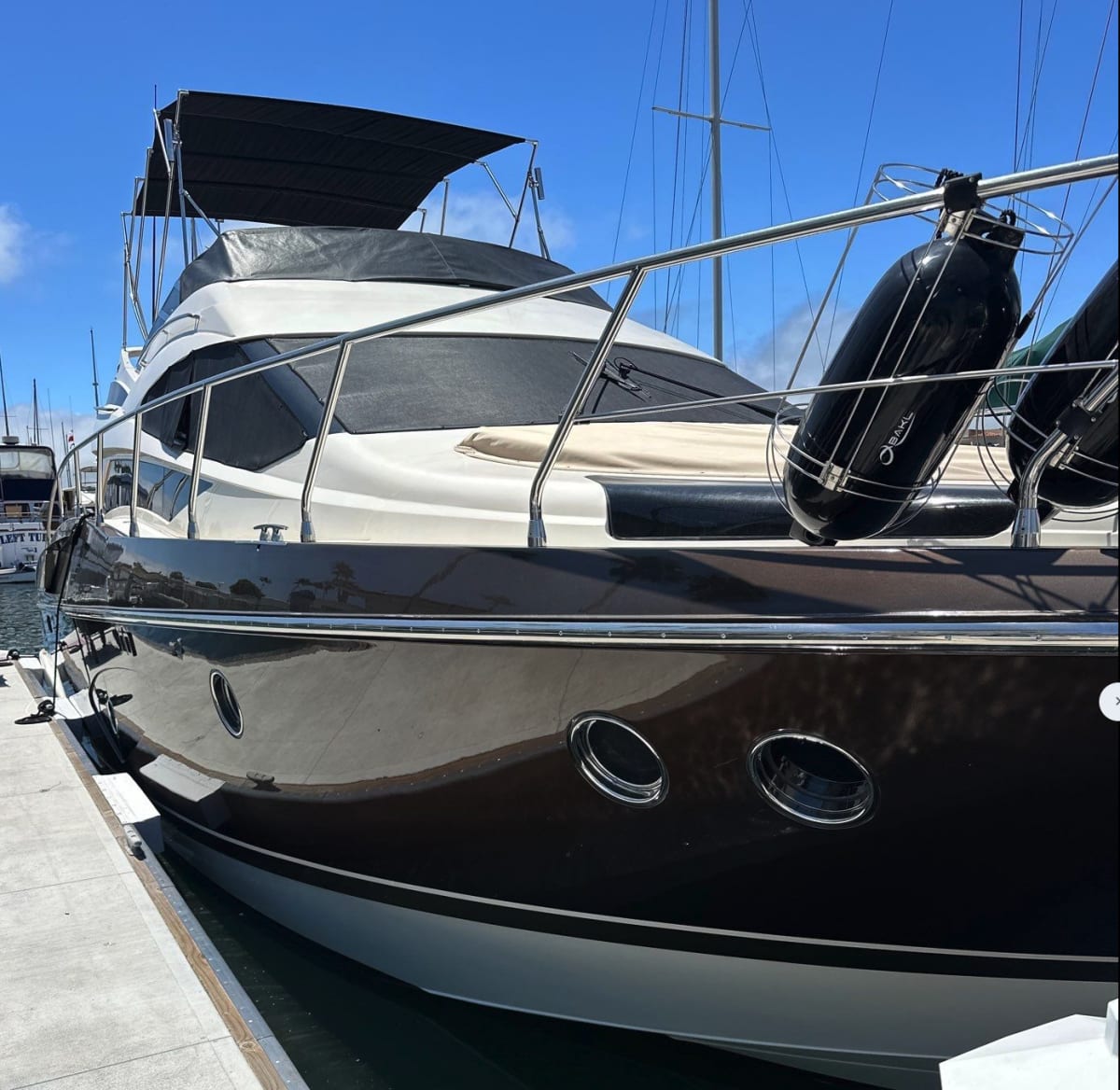
A mechanically fluent owner, a marine-shaped gap
Dan can fix most things with a motor in them. What he did not have was the marine side of it: which of this boat's systems to watch, what a healthy reading looks like on her, and a set order that turns a look around the engine room into real information. Thirty hours into ownership, the boat was still telling him things in a language he had not been taught.
That gap is not his. It is the industry's. Yards fix boats, they do not explain them. Manuals describe systems, not judgment. And the one-on-one, hands-in-the-bilge teaching that closes the gap barely exists as a service you can buy, which is why owners with real mechanical skill still feel like tourists below their own decks.
How we trained through itHands in the systems, reasons said out loud
We worked the boat end to end. His hands did everything, and my job was to explain the why as we went. Fluids first, done properly: wipe the dipstick, then read it, because a lazy sample teaches you nothing. Coolant reservoirs found and sighted, including the one that took some hunting. Then the finds that made the day pay for itself: a diesel weep under an engine, spotted, traced to its likely cause at the fuel manifold, photographed, and put on the list while it was still a rag job instead of a situation.
Seacocks next, every one located and exercised, with the honest version of the seamanship conversation: yes, the book says close them when you leave, and no, almost nobody does, me included on my own boat. What is non-negotiable is knowing where they live and proving each one still moves, because a seacock that has seized open is a hole in your boat with no tap.
The generator got the full introduction before its first real use: oil checked, panel open for the first start, and there was the second find of the day, a raw-water pump beginning to seep, corroding its little corner quietly. Not a showstopper, and I said so plainly, because the words matter: this goes on the watch list, not the panic list. Then the bilges, looked at and written down before departure so every future look is a comparison. And the batteries, where his own load-testing work between sessions got a second set of eyes and a nod.
Underneath all of it ran the documentation habit: photos of the same spots every visit, findings logged in the spreadsheets he already loves, levels noted before use. Learn one, do one, teach one, until the engine room stopped being territory and became his.
Thorough now. Five minutes once the boat is yours below decks as well as above.
The outcomeTwo finds, zero drama, one bilingual owner
The diesel weep and the pump seep live on a photographed watch list instead of in the future as surprises. The seacocks all move. The generator is proven. And the owner now walks his engine room the way he walks his own workshop, reading it, logging it, and knowing precisely which conversations to have with a professional when one is needed. The boat still speaks the same language. Now so does he.
What comes with it is a boat that is available. Small faults get sorted the same week instead of waiting on a booking, so fewer good weekends get lost to something that turned out to be a twenty-minute job. Owners who understand their systems spend more days on the water, not fewer.
What you can take awayBuy back the knowledge the service visits carry away
Every job you outsource without understanding takes a little knowledge of your own boat away with it. Maintenance training reverses that: your hands in your own systems, with someone beside you naming what you are looking at.
Build baselines. Know what your fluids, filters, belts, and bilges look like when everything is right, and problems announce themselves early, while they are still small money.
Knowing the systems also changes every conversation with every technician you ever hire. You can describe symptoms properly, ask better questions, and know whether the answer you are getting holds water.
The differenceMaintenance done for you keeps you a stranger on your own boat
Every service visit that happens without you learns something about your boat and takes it away in the van. Nothing wrong with hiring the work, but the knowledge should stay aboard. One-on-one training runs the same tasks with your hands in them, so the finds, the baselines, and the judgment accumulate to you.
And it compounds. An owner who knows his systems buys better repairs, catches faults earlier, describes problems precisely, and spends less every single year he owns the boat. The training is the only maintenance item that gets cheaper with age.
Your hands, your boat, my commentary. That order is deliberate, because knowledge that arrives by watching evaporates by the next service and knowledge you earned with a spanner in your hand does not. I would rather you called me about the hard problems than the routine ones, and the fastest way there is for you to own the routine ones outright.
How we do itHow we run maintenance training
- Your boat, your systems, your hands. No classroom engine. Every hour lands on the machinery you actually own.
- Sample properly, read properly. Wiped dipsticks, sighted reservoirs, exercised valves. Technique first, because bad samples build false confidence.
- Build the baseline. Levels noted before use, photos of the same spots, findings logged in the format you will actually keep.
- Name finds calmly. Watch list, work list, or war room, each in its right box, with a photo and a straight explanation.
- Prove the scary stuff. Seacocks that move, a generator that starts, systems tested before you need them in anger.
- Finish on judgment, not tasks. The end state is an owner who knows what matters, what waits, and what deserves a professional.
Maintenance training is buying back the knowledge that service visits carry away. Hands in your own systems, baselines built, finds named calmly, and an owner who reads his boat the way he reads his own workshop.