Being precious about the boat is what causes the damage. Hesitation at the wrong moment is the most dangerous thing aboard, because a boat that is not being driven is being driven by the wind and the current instead, and neither of those has a plan.
You slow right down coming into your slip because slow feels safer, or you tense up the moment there is a crosswind and people on the dock watching. This is for you.
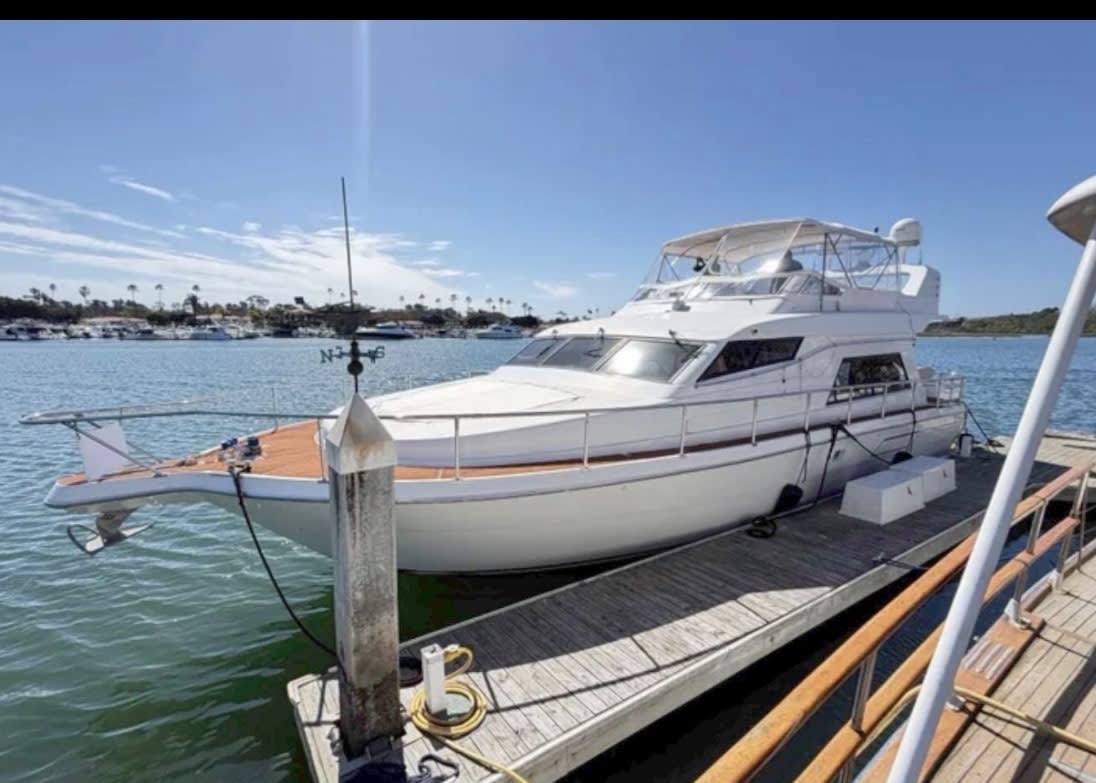
Careful and safe are not the same thing
Caring about the boat feels like the responsible position. It feels like the mark of someone who takes ownership seriously, and in the shed, on the maintenance schedule, in how you spec a job, it absolutely is.
Bring that same caring into a berth with a crosswind and it turns into something else. It becomes hesitation. I watch owners come into a slip at half the speed they need because slow feels safe. Slow is not safe. Slow is no steerage, no control, and thirty tons of boat going wherever it feels like going, usually with somebody's wife on the bow between it and a piling.
The fear of a scratch put her there.
How I learned itA million dollars of fresh paint and one simple job
I had left home at seventeen. Years later I finally got myself living close to my parents again, first time since, and then I gave it up to go into yachting. Gave up a relationship. Gave up a job. Packed the lot in for a career that at the time was mostly a hope. So by the time I got a berth I was carrying all of that around with me, and every boat I stepped onto had crew on it who were better than me. You feel that. What I did with the feeling was put perfection on a pedestal and decide the way to make it stick was to never get anything wrong. It made me worse at almost everything.
I worked my way up to a 164ft Westport, and I was aboard her three years. She towed a large centre console as a chase boat. The owner decided to repaint her in Florida, a five month, million dollar operation, and while she was in the shed the console lived in storage.
Refit finished. Boat back in the water. Owner picked up and aboard for the first time. My job that afternoon was to go and collect the console and bring her back alongside so he had his chariot for the week. I had done that job a hundred times.
The only thing different that day was the paint.
I came in too careful. That is the whole of it. I was so focused on not touching her that I stopped driving properly, second-guessed myself on the controls, and made the exact mess a bit of commitment would have avoided. The bow came round further than I wanted and the anchor of the centre console went into the topsides. Left a scratch you could catch a fingernail in.
I got her made fast and looked up. He was standing on his balcony looking straight back down at me.
What happened nextThe two questions, and the order he asked them in
The radio went a few minutes later. Captain's voice. The owner wants to see you in his cabin.
That does not happen. In three years on that boat I had never once been called into an owner's cabin, and I could not think of a single version of the next ten minutes that ended with me still employed. I had the whole walk down there to run through all of them.
He asked me straight out. Did you just scratch the boat.
I said yep.
Then he asked two questions, in this order. Was anyone hurt. No. Are you going to repair it. Yes.
He nodded and said, okay, well, you know. If it doesn't breathe, it doesn't matter.
That was the meeting. I repaired it, it took what it took, and I never heard about it again. Not from him, not from the captain, not from anyone in the crew mess who would have loved to have it.
I have thought about those two questions for years, because of the order he asked them in and because of what he did not ask. He did not ask how. He did not ask whose fault it was. He did not ask what it was going to cost him, and it was his money.
There is no such thing as a perfect docking. Everyone hits something eventually. The difference between people is not whether they crash, it is how they crash.
The steerDecide what actually matters before you are in the fairway
There is no such thing as a perfect docking. I have never done one. I have done a lot of good ones, a few that got the job done, and a handful I would not want filmed. The people you watch bringing big boats in without any apparent effort are not doing it perfectly. They are doing it repeatedly, and they have stopped spending any of their attention on how it looks.
And everyone is going to hit something eventually. Anyone who tells you otherwise has either not been doing this long or is not being straight with you. What separates people is the speed, the direction, and whether everybody's hands and heads were inside the boat.
That is decided before you get anywhere near the dock. Sort it early and a scratch is just a scratch. It is a phone call and an invoice and a slightly annoying week. Leave it unsorted and you are relying on nothing going wrong, and something always goes wrong.
What to sort before the approachThe three things that decide how it goes
- Know where every person on board is standing, and that no one is between the boat and anything solid. Hands and heads inside the rail. Nobody fends off a moving boat with a leg.
- Read the wind and the current before you commit, not once you are between the pilings. Know which way she will set and how fast, so the boat is not telling you something you did not expect halfway in.
- Have an out, and know what triggers it. Decide in advance what a bad approach looks like, and give yourself permission to drive away and come round again. An abort is free. A rushed save is not.
- Carry enough way on to steer. Steerage is control. If you are drifting in at idle you have handed the boat to the wind, and the wind does not care about your paint either.
- Brief the crew before the approach, not during it. One person calling, everyone knowing their line and their job, so nobody is improvising while you are busy driving.
- Accept the scratch as a possible cost of a controlled arrival. If the choice is a mark on the gelcoat or an uncontrolled boat, take the mark every single time.
If it doesn't breathe, it doesn't matter. Never let the fear of a scratch stop you putting the boat, and the people in it, somewhere safe and under control.