Training your own crew is something a capable owner can absolutely do, and done right it changes what your boat is for. The method is staged: talk a skill through, walk it through, drill it planned, then drill it live. One owner used exactly that to turn a family friend with zero hours into real hands on a Catalina run.
If you own a 40 to 90ft boat in San Diego and the only capable person aboard is you, this is for you. Every trip depends on you, every break underway stops the boat, and your family or friends ride as passengers instead of crew.
An owner, an overnight run to Catalina, and a crew member with zero hours
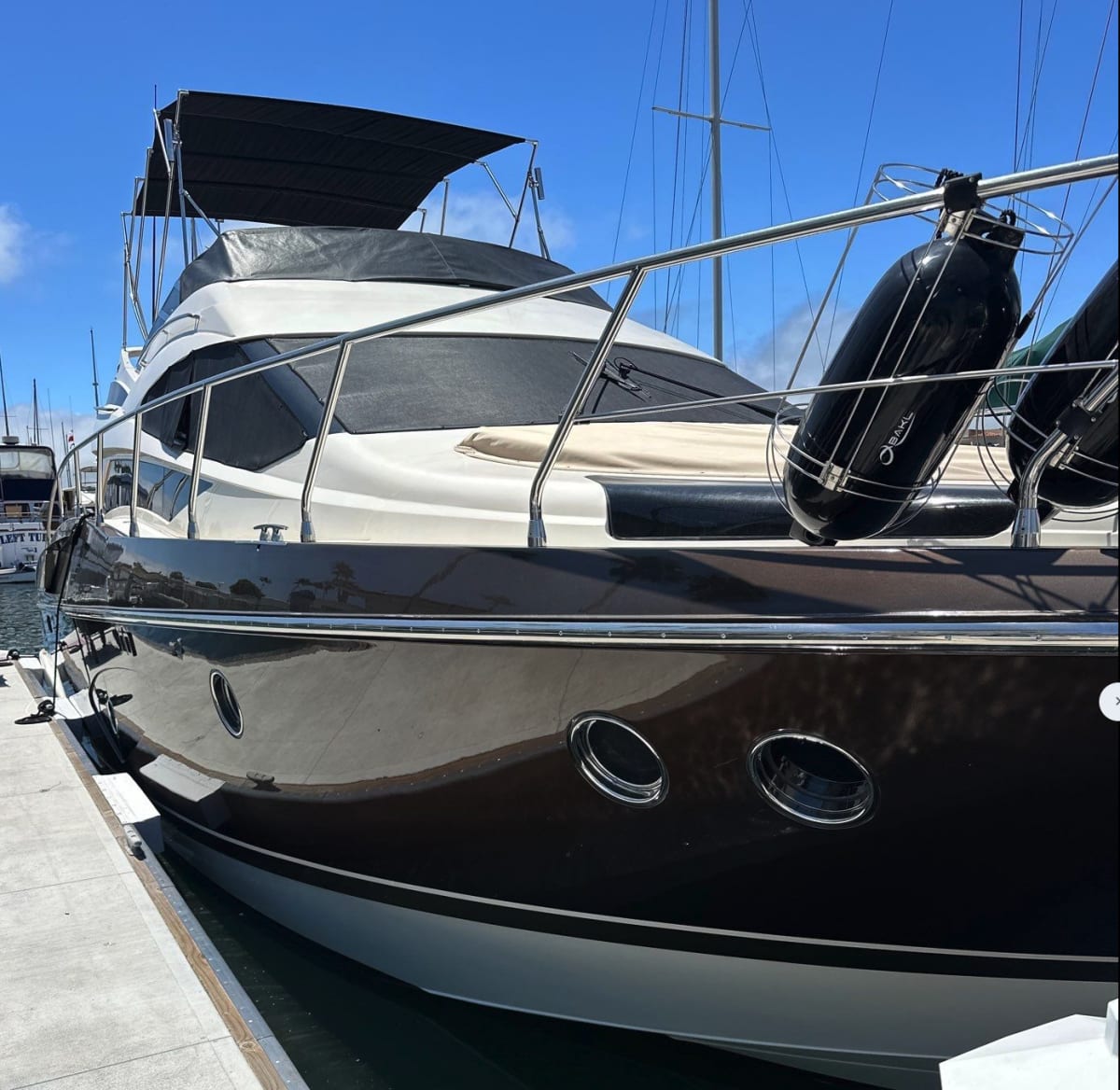
A 65ft motoryacht owner wanted to run overnight trips to Catalina with a crew member who was brand new to boating. Not a hired captain. A young family friend with no hours and no idea the industry even existed.
The usual answer is to keep the new person as a passenger. Hand them a drink, tell them where to sit, do everything yourself. That is how most owners run their boats, and it is why they can never take a break underway, never sleep easy on a mooring, and never leave the helm without the trip stopping.
He wanted a real crew member. So the question became: how do you build one from scratch, safely, on your own boat?
How we trained through itWe started with the owner, months before the crew member ever stepped aboard
We did not start with the crew member. We started with the owner. He learned the standards himself first: how a helm handover actually works, how a safety briefing lands when it is spoken peer to peer rather than barked, how to plan a manoeuvre before you need it.
Then we gave him the framework professionals use to build crew: drills that grow in stages. First a relaxed open talk. What would we do right now if someone went in the water? Where is the gear? Then a slow walkthrough with the boat, no pressure, stopping to discuss. Then a planned drill at normal pace. Only after all that does anything get done unannounced. Each stage builds the muscle memory before the stress arrives.
On the trip, it showed. Mid-channel, the owner needed a break from the helm. He did not say watch this for five minutes. He ran the full handover he had been taught, ending with my helm is yours, and waited for her to answer before he stepped away.
"My helm is yours." And he waited for the answer: "Helm is mine." A brand new crew member, one week in, taking the handover seriously. That is not luck. That is the standard being set from the first hour.
The methodFour stages, one emergency at a time, the way superyachts do it
The staged approach has a name and a shape. On the yachts I worked, it is how a junior stewardess ends up carrying the same safety knowledge as the first officer. One emergency, four passes, roughly one a week.
- Open discussion. No pressure, everyone talks. What would we do right now if there was a fire? Then go and find the extinguishers together, and learn which type does what and where it should not be used. This sets the tone early: this is normal, this is how we do things here.
- Walking-pace walkthrough. Name the scenario, say a galley fire, and physically walk your roles at walking pace, stopping to talk at any point. Power isolation comes off first, because the power is probably the source. Everyone handles the fire blanket at least once.
- Announced and timed. Everyone knows when and where. Run the whole thing at a normal pace and see how clean it gets. Nobody is trying to catch anybody out.
- Unannounced. Only once the habits hold. On one yacht we filled a crew corridor with a fog machine at two in the morning and hit the alarm. After a couple of those, nobody melts down, because the memory is already built.
For man overboard with a crew of two, it adapts cleanly. Talk it through first: on a boat this size the honest answer is stop, turn, come back, allowing for wind and current. Then a walkthrough with nothing in the water, learning how the boat behaves against a fixed mark by approaching a speed marker from downwind until it sits within boat-hook reach. Then the announced live drill, a fender over the side and the full sequence run: life jacket on, boat stopped, eyes locked on the casualty, radio if needed. I stand by and play the one in the water, so the procedure has to carry itself without me.
And then one day, on a normal trip, the owner says he is popping below for a minute, walks to the bow, makes eye contact, and throws a fender over. That is the whole thing alive on a two-person boat.
Why it has to be youYou never want a babysitter doing mum's work
Here is how I put it to him. You are the mum, and the boat is your baby. Hand it to me and you get a very aware aunt. A good management company makes a fantastic nanny. The boat guys next door are great babysitters. All of them have their place. But a babysitter will never take the interest in drilling your crew that a mum will, because it is not their child. On your boat, drills are mum's work, and they cannot be outsourced. That is also why this page exists rather than a service page. The person who should be running these drills is you.
The weather did its part too. They copped a rough ride home, wind against swell, no rhythm to it. She handled it, because nobody aboard was pretending things were fine or panicking. The owner logged the conditions afterwards against what the forecast had shown, so next time that forecast appears he has his own record of what it actually felt like out there.
What you can take awayCapability is built in stages, and teaching it proves you own it
Capability on a boat is built in stages: talk it through, walk it through, drill it planned, then drill it for real. Skipping straight to the live version teaches panic, not skill.
The standard you set in the first hour is the standard your crew keeps. A proper handover, a calm briefing, a plan spoken out loud before the manoeuvre. New crew take their cues entirely from you.
And the fastest way to know you have truly learned something is to teach it. This owner did not just retain his training. He passed it on, in his own words, on his own boat. That is the difference between taking a course and becoming a captain.
The outcomeA trip run properly, and a crew member who wants more
The owner ran his Catalina trip, took proper breaks underway, and came home with a crew member who wants more, not less. She went from never having heard of this world to announcing helm changes like she had been doing it for years. Fire and man overboard drills are already scheduled for their next session, because the plan grows as the crew does.
He also got his boat back. Breaks underway instead of six hours locked to the helm. An overnight at the island instead of a dash there and home. Guests aboard without quietly dreading the moment something needs doing at both ends of the boat at once. He told me the whole thing had renewed his enthusiasm for boating, which is a strange thing to hear about fire drills until you realise what they actually buy you. By the end, the owner needed me less for the basics and used me for the harder questions instead. That is the whole point.
The differenceMost training stops at the owner. This kept going.
A hired captain would have run that trip for him and left him no more capable than before. A course would have handed the crew member a certificate and no feel for his boat. What worked here was the owner holding the method himself, curated to his boat and his crew, with a first mate on call for the questions that came up along the way.
That is the model. The owner is the captain. The training makes that real, then it multiplies, because a capable owner can build capable crew.
How we do itHow we help an owner train their own crew
- Train the owner to standard first. Handover, briefing, planning. Crew learn from what they see, so the owner's habits are the curriculum.
- Set the tone in the first hour. Safety first, spoken peer to peer. A new crew member who feels respected takes the standard seriously.
- Stage every skill. Open talk, walkthrough, planned drill, live drill. Never skip to the live version.
- Use real trips as sessions. A Catalina run teaches more than a classroom ever will, because the boat, the water, and the stakes are real.
- Log what the weather actually did. Forecast in one column, what it felt like in the other. That log becomes the owner's own judgment, written down.
- Grow the plan with the crew. When the basics hold, add drills and scenarios. Scope expands as competence unlocks, never before.
The owner in this case. Name withheld for privacy.
You do not need a professional aboard to have real crew. You need a method: talk it through, walk it through, drill it planned, drill it live. Set the standard in the first hour and a complete beginner will rise to it.