Deciding whether to refit your current boat or move up to one that already suits you comes down to two numbers most owners skip. What the work actually adds back in resale value, and how many good years each boat buys you. Spend on modifications you will move on from and you get little of it back. Spend on the boat that already fits and you buy time.
If you own a boat you like but it does not quite work for you anymore, and you are weighing a refit against just buying the boat that already has what you want, this is for you. No judgment either way. It is one of the most common calls we help owners think through.
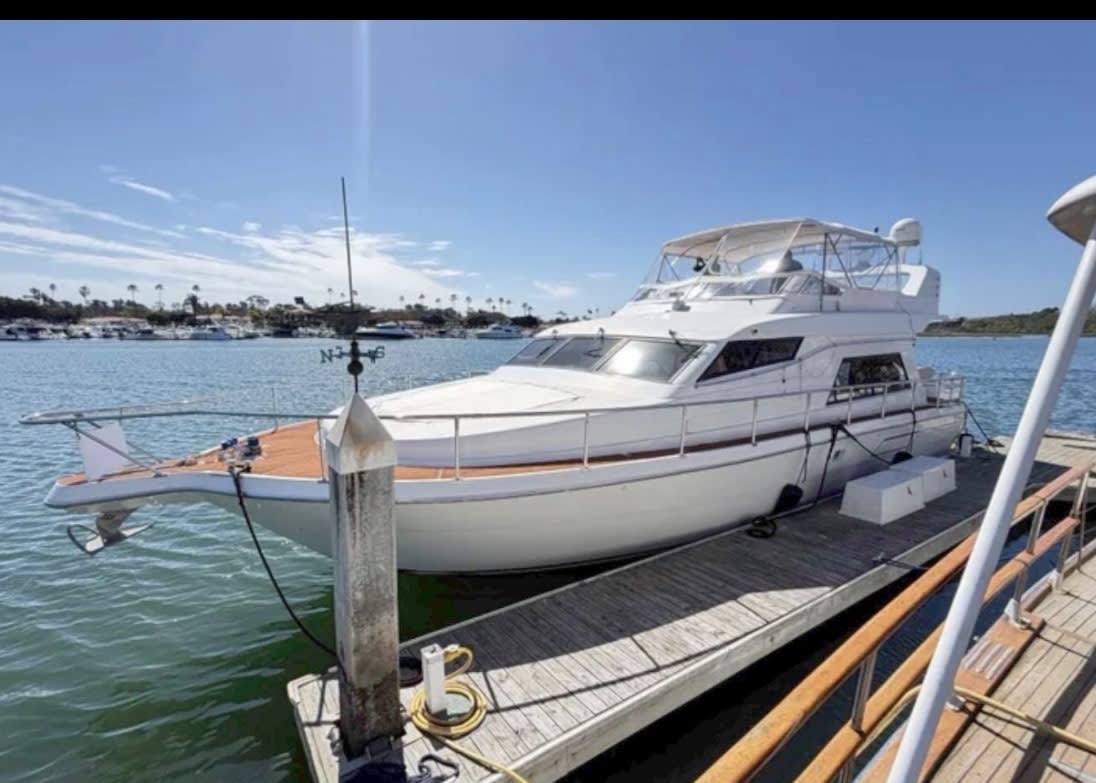
Pour money into the boat he had, or move to the one that already worked
An owner called me with a decision he had been circling for a while. His current boat, a trawler he knew well and liked, was getting harder to move around on, for him and for the older friends he takes out. There was a bigger boat he had his eye on that solved all of that. It already had the layout, the access, and the security he wanted. The question was whether to spend real money making his current boat work, or put that money toward the one that already did.
The specific job on the table was widening the stern step so getting on and off at the dock was easier, and maybe reworking the ladder into proper steps. Sensible ideas. But the real decision was bigger than the step.
How we thought it throughTwo numbers cut through it: resale value and good years left
First, the money side. Extending a swim step is doable, and I could manage the project for him. But it is a yard job. Once you factor in the yard time and the finishing, it adds up, and here is the part that matters. It adds almost nothing to what the boat is worth. He would spend a serious sum and see very little of it again when he sold. That is fine if this is your forever boat. It is a poor trade if it is not.
Second, the time side. This is the number owners skip. His current boat gave him maybe one to two more years of easy mobility at the level he is at now. The bigger boat, set up the way it was, gave him something closer to five. So the swim step was not really buying accessibility. It was buying a year or two of it, at a price that did not come back, on a boat he would likely move off anyway.
There was a practical layer too. He had a lot going on ashore, property to sell and a business to sort out. A big refit in the middle of all that, or running two boats at once, was one more ball in the air he did not need.
The steerPrice the refit honestly first, then let listing the boat surface the answer
My steer was not buy the big one. It was do not fall in love with the refit before you know what it really costs and what it really gives back. So the first move was to get a firm price on the swim-step work, from the company he had found and from my own digging. Nothing commits you until you have that number in front of you.
The second move was to take the pressure out of the decision. List the current boat. If it sells and the boat he wants is still there, the decision has made itself, cleanly, with no two-boat overlap and no gamble on timing. If it does not sell, he has lost nothing and learned something real about what his boat is worth.
Through all of it, the call stayed his. I gave him the trade-offs the way I would want them if it were my money. A good friend of his was telling him to just buy the boat. For what it is worth, on the numbers, I was with the friend. But it was his boat, his money, and his call to make.
Money you spend modifying a boat you will move off buys you a year or two and comes back to almost nothing. Money toward the boat that already fits buys you the horizon.
Where it landedA clear way to test the decision, without betting the timing
He left with a plan that did not require him to guess. Get the real price on the refit. Weigh it honestly against what it adds, which is almost nothing, and what it buys, which is a couple of years. List the current boat and let the market weigh in. Then decide from facts, not from the pull of the boat he already knew. The point of the conversation was never to talk him into anything. It was to make sure that when he did decide, he was deciding on the things that actually mattered.
What you can take awayBefore you refit, price it and ask what it really buys
A refit that makes your boat nicer to you is not the same as a refit that makes your boat worth more. Some jobs are both. Many are neither. Before you commit, get a firm price, and be honest about how much of that money you will ever see again.
Then put the job next to the alternative. If the same money moved you to a boat that already has what you are trying to build, and bought you more good years, the modification might be solving a two-year problem at a five-year price.
And take the pressure out where you can. Listing the boat you might sell anyway is not a commitment. It is information. Often it is the cleanest way to let a hard decision make itself.
The differenceGuidance that sits on your side of the table, not the yard's
A yard will quote you the job you ask for. A broker will show you the boat. Neither is wrong, but neither is sitting on your side of the table doing the maths on whether the job is worth it to you. That is the gap this fills. I have no boat to sell you and no yard time to fill. What I have is years of watching these decisions play out, and a straight answer on which way the numbers point for your situation.
You still make the call. That is the whole point. You just make it with someone in your corner who has seen where each road goes.
How we do itHow we work a refit-or-replace decision
- Get the real number. Before anything else, a firm price on the work, including yard time and finishing, not a rough guess.
- Ask what it adds. Separate what the job does for you from what it does for the boat's value. They are rarely the same.
- Count the good years. Be honest about how long this boat suits you, and how long the alternative would.
- Weigh the bandwidth. A big refit, or two boats at once, has a cost in time and stress, not just money.
- Take the pressure out. Where it fits, list the current boat so the market helps you decide, with no commitment.
- Leave the call with you. I lay out where the numbers point. You decide. It is your boat.
Before you spend on a boat you might move off, price the job honestly and ask what it really buys. A modification that adds no value and a year or two of use can cost more than moving to the boat that already fits.