Insurance-required hours are the supervised operating hours some marine insurers ask a new owner to complete with a qualified captain aboard before they will cover the boat without one. Most owners waste them sitting in the passenger seat while a hired captain drives. Treat them as structured training instead, and you finish the requirement actually able to handle your boat, with the insurer's condition met as a byproduct.
If you have just moved up to a bigger boat in San Diego and your insurer has made coverage conditional on hours with a captain, this is for you. It is not a judgment on your ability. It is a chance most owners are handed and almost nobody uses properly.
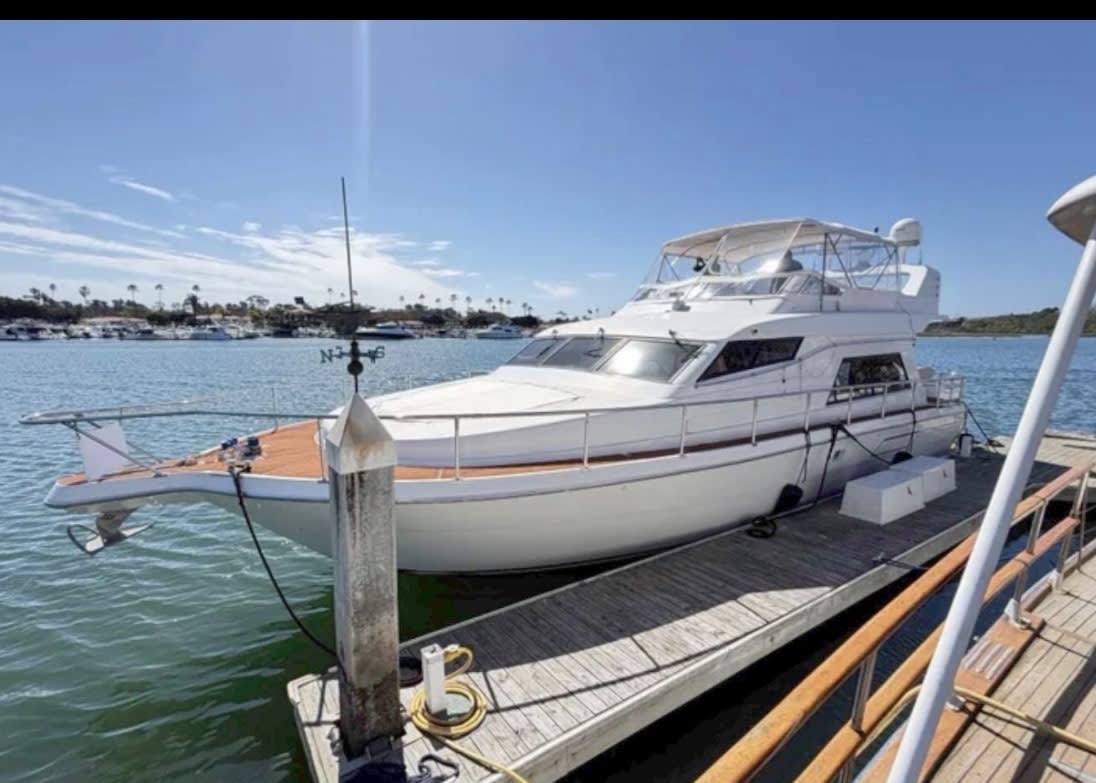
Forty required hours, and a decision about what they were really for
An owner came to me with a number. Forty hours of training his insurer required before they would cover him operating his boat on his own. He knew he had to do them. The only real question was whether they would be forty hours of being driven around, or forty hours that actually made him a captain.
Most owners spend that time as a passenger and come out covered but no more confident than the day they bought the boat. We agreed early that we were going to use every one of those hours to build something he would keep.
How we ran the hoursWe built the forty hours around him, not around a syllabus
We started with a conversation, not the boat. We set expectations with each other. Neither of us expected him to be an expert by the end of forty hours. What we did expect was for him to feel genuinely confident taking the boat out on his own, with the caution and the planning that keeps that confidence honest. That was the target we both signed up to.
Then I asked him where the gap between owning the boat and enjoying it actually sat. He named three things. Docking. Knowing what to do if something went wrong. And taking the boat somewhere new. So that is what we built the plan around, his real worries, not a generic checklist.
From there we curated the hours into lesson blocks. No pressure, and the pace stayed his, but we settled on about four hours a day as the right dose. Enough to make real progress, not so much that it turned into a blur. We ran them in the mornings, on purpose, so we could lay down the fundamentals on flat water before the afternoon wind came in to test them. Ten dates, planned as close together as we could manage, because a skill repeated while the last session is still fresh sticks far better than the same skill spread thin across a season.
We executed the plan, and as he got solid, the plan grew with him. Once the fundamentals were holding, we added the things that turn a capable owner into one who actually loves being out there. A night passage. An anchoring deep-dive. The stuff he would never have thought to ask for at the start, because he did not yet know it was within reach.
A qualified captain aboard for every hour kept the insurer satisfied. How we spent those hours is what kept him.
You can pay a captain to be capable for you, or you can spend the same hours becoming capable yourself. The insurer does not care which. You should.
Where it landedThe forty hours did their job, and then some
He finished the forty hours and the coverage condition cleared. But that was the byproduct. What he actually walked away with was the thing we set out to build: real confidence to take his boat out on his own, with the caution and planning to back it up. He could dock it, he knew what to do when something went sideways, and he had already taken it somewhere new. The night passages and the anchoring were the bonus, the part that turned a boat he was slightly wary of into one he could not wait to use. By the end, he needed me less, not more.
The differenceA great captain is not automatically a great teacher
Now, some captains will hand you the wheel and let you have a go, trial and error, with them aboard. That is a real step up from watching, and if that is the offer in front of you, take it over sitting in the passenger seat every time.
But here is the catch. Being a brilliant captain and being a brilliant teacher are two different skills, and one does not come with the other. Plenty of people can put a 60-footer on the dock in a crosswind without thinking, and have no real idea how to get that ability out of their own hands and into yours. They take the wheel back the second it gets tight. They explain it the way it makes sense in their own head, which is not always the way it lands in yours. You come away having watched someone good. You do not come away good.
I happen to be both, and I have worked at the second one on purpose. I love the teaching part. Watching an owner go from white-knuckled to relaxed is the whole reason I do this. And I have spent years on the methods underneath it: how a skill actually gets learned and made automatic, not just how to perform it. So I break a manoeuvre into its real parts, hand them to you in the right order, at a pace that matches how you are picking it up, and build the understanding of why it works, not just the motions. That is what makes a skill hold when the wind comes up and people are watching, instead of falling apart the moment conditions change.
And here is the part almost nobody else is doing. Most people offering captain's training for these hours are genuinely training. They are just running the same training, the same way, for every owner who walks down the dock. A curriculum delivered, not a skill built into the person in front of them. How a cognitive skill actually gets onboarded changes from one owner to the next, shaped by how you take in information, where your confidence already sits, and what makes it click for you. I curate the method to that, to you, while satisfying every requirement the insurer set. You meet the curriculum they need, and you walk away with the skill genuinely in your hands. Most training gives you one or the other. This gives you both.
The hours buy you time with a qualified captain. What you do with that time depends on whether the person beside you is teaching you, or just running their curriculum.
How we do itHow we run insurance hours as real training
- Start from your policy, not a syllabus. We read exactly what your underwriter requires: how many hours, what counts as a qualified captain, and what they will accept as evidence. The plan is built around your condition, not a generic course.
- Train on your boat, in your water. Hours only build real capability if they happen where you operate. Your slip, your fairway, your anchorages, your traffic. Not a school boat in a school marina.
- Weight the hours toward the solo moments. The point is everything you will do without a captain aboard. Departure, return, close quarters, anchoring, and what to do when something goes wrong. We spend the time there.
- Stack the sessions for retention. A skill holds when it is repeated while the last attempt is still fresh, in manageable doses, not crammed and not spread thin across a whole season. We plan the dates close together, keep the daily blocks to a length that builds confidence instead of frying it, and run them when conditions let you learn before they test you.
- Document it cleanly for the underwriter. Every hour logged and signed off in a form your insurer will accept, so the condition is met without a back and forth.
- Finish on competence, not the clock. The required hours are the floor. If something is not yet solid when the timer runs out, we keep going, because the goal is you being able, not the requirement being technically met.
Insurance-required hours are not a tax on owning a bigger boat. They are paid training you have to do anyway. Run them as training and you come out capable, not just covered.